New global initiative to tackle illegal and unsustainable taking of migratory species
A major move aimed at tackling biodiversity loss was launched today, marking a significant step forward in international efforts to address one of the most pressing threats facing wildlife worldwide.
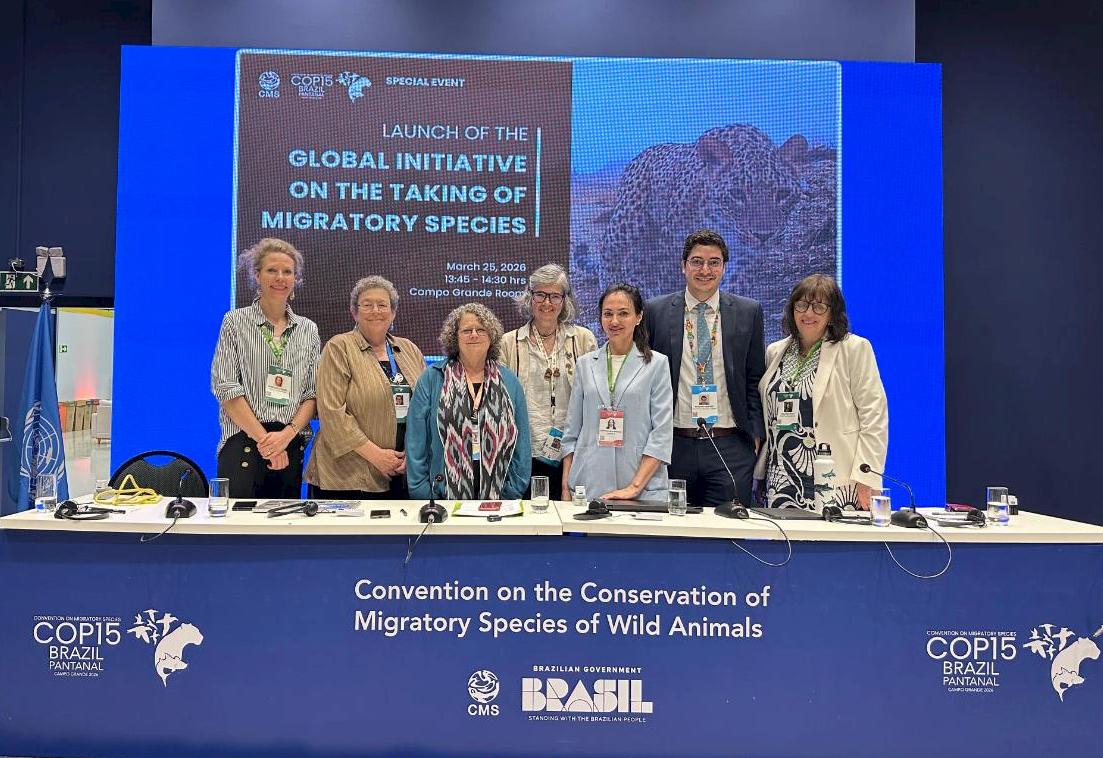
The Global Initiative on the Taking of Migratory Species (GTI) was launched at the Convention on the Conservation of Migratory Species (CMS) 15th Conference of Parties currently taking place in Brazil.
It focusses particularly on domestic trade and unsustainable take, and has been developed to provide pragmatic, coordinated support to governments and partners in addressing illegal and unsustainable take.
TRAFFIC has helped shape the initiative from its inception and is a member of the Working Group on Illegal and Unsustainable Taking of Wildlife established under the CMS in 2024.
Melanie Heath, TRAFFIC senior programme director, highlighted the organisation’s long‑standing role in addressing wildlife crime and unsustainable use.
This new initiative presents a significant opportunity to transform the systems and behaviors that enable illegal and unsustainable take - one of the most significant threats to migratory species globally,"
said Heath.
“It represents a very timely step forward and TRAFFIC looks forward to continuing to support CMS Parties and partners to achieve sustainable long term conservation impact.”
Addressing a critical and under‑served gap
While global attention often focuses on high value international wildlife trafficking, evidence shows that a far greater proportion of species are threatened by domestic use and local supply chains. The GTI has been designed to fill this critical gap by focusing upstream—before pressures escalate into largescale commercial exploitation or international trade.
The initiative will complement and strengthen existing efforts under CITES and other international frameworks, while focusing explicitly on domestic drivers of illegal and unsustainable taking, national policy and legal frameworks, engagement with Indigenous Peoples and local communities, and demand reduction approaches tailored to local contexts.
Recognising that an understanding of the whole supply chain from source to consumer is fundamental to identifying opportunities for intervention, TRAFFIC stands ready to bring its 50 years of expertise to the table.
TRAFFIC’s work in this area to date includes exploring the motivations for the overexploitation and illegal take of migratory birds. This involves social research across communities and changemakers to understand the drivers and deterrents of demand, and the factors that can influence change.
TRAFFIC also worked alongside the Nigeria Conservation Foundation to understand domestic drivers for the spiritual use of vulture parts, and explore what stops traditional healers from using alternatives.
Supporting governments with practical solutions
GTI core areas of work will include:
- improving data and knowledge on domestic use, supply chains and sustainability thresholds
- identifying and addressing policy, legal and enforcement gaps at national level
- supporting engagement with Indigenous Peoples and local communities
- enhancing education, awareness raising and demand reduction efforts to prevent overexploitation
By strengthening national frameworks and tackling socio‑economic and cultural drivers of use, the initiative aims to help countries meet their commitments under the Kunming–Montreal Global Biodiversity Framework, particularly targeting sustainable use, species recovery and preventing extinction.
A growing mandate under CMS
The launch of the GTI responds directly to mandates adopted by CMS Parties, including decisions taken at CMS COP14 and subsequent work by the CMS Scientific Council, which called for effective measures to address illegal and unsustainable taking of migratory species.
For TRAFFIC, the launch represents an important opportunity to help ensure that action on migratory species addresses the realities of domestic use and local drivers—where some of the most significant and least addressed conservation challenges remain.