
Cross-border enforcement cooperates to target illegal wildlife trafficking
Customs officers in China and Central Asia strengthen skills and share knowledge in illegal wildlife trade detection
22–26 June 2026 | Urumqi, Xinjiang Uyghur Autonomous Region, China.
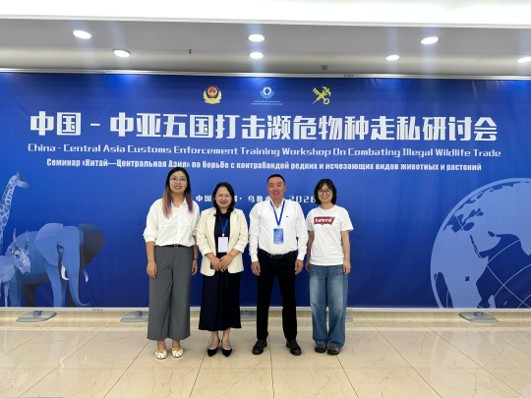
Customs officers from Kazakhstan, Kyrgyzstan, Tajikistan, Turkmenistan, Uzbekistan and China have come together to exchange knowledge and experience in fighting wildlife trafficking in the China and Central Asian regions.
Attendees shared practical enforcement experience, information on analytical tools and intelligence on wildlife trafficking trends.
The training emphasised the need for regional cooperation in the detection and prevention of illegal wildlife trade and implementing Convention on International Trade in Endangered Species (CITES). It contributed to the implementation of the landmark agreement to build regional cooperation to stop illegal wildlife trade and drive sustainable livelihoods in Central Asia The Samarkand Declaration and Action Plan of regional cooperation 2025-2032.
"Illegal wildlife trafficking is a transboundary crime that requires coordinated regional action. By strengthening the analytical capacity of customs officers and promoting closer cooperation between China and Central Asian countries, we can improve the detection and prevention of illegal wildlife trade and better protect the region's biodiversity."
- Bakytbek Tokubek uulu, Programme Manager, TRAFFIC Central Asia.
Peer-to-peer learning opportunities like this empower customs officials across Central Asia by strengthening their knowledge, fostering regional cooperation, and enhancing their capacity to combat illegal wildlife trade."
- Igor JAKUPIC, Programme Officer and ICCWC Project manager
I am pleased to have this opportunity to learn from our Chinese colleagues and reconnect with my counterparts from across Central Asia. The knowledge, practical experience, and professional networks gained through this workshop will strengthen our capacity to combat illegal wildlife trade."
- Meerim Musaeva, Senior Specialist, State Customs Department under the Ministry of Finance of the Kyrgyz Republic
The training was organised by the World Customs Organization (WCO) Anti-Smuggling Bureau of the General Administration of Customs of the People's Republic of China (GACC), included presentations on trafficking trends in Central Asia, presented by TRAFFIC Central Asia and TRAFFIC China.
Notes:
Delivered under the EU-funded GUARD Project, implemented by the UNODC, WCO, INTERPOL, the CITES Secretariat, with technical support from TRAFFIC.
The above-mentioned activities are implemented by TRAFFIC, funded by the European Union through the GUARD Wildlife Project - Global United Action to Reduce and Dismantle Wildlife Crime. GUARD Wildlife aims to reduce the international trafficking of wildlife and forest products, with a focus on organised criminal networks. Led by UNODC, the project is implemented through a close partnership between members of the International Consortium on Combating Wildlife Crime (ICCWC) and civil society organisations including TRAFFIC.