Strengthening wildlife trafficking detection at Madagascar’s air and sea borders
Every year, significant quantities of protected animals and plants leave Madagascar, smuggled across borders through its ports and airports. Moving via both freight and passenger routes, these illicit flows fuel a lucrative and increasingly diversified international trade.
Madagascar’s unique biodiversity, much of it found nowhere else on Earth, makes its wildlife especially attractive to global markets. Species are trafficked to meet demand across a range of sectors, from the pet trade to ornamental plants, luxury timber such as rosewood and palisander, and even high-end food markets for products like shark fins and sea cucumbers.
At the frontline of this challenge are enforcement officers stationed at ports and airports, who play a critical role in detecting and disrupting wildlife trafficking. Yet without specialist training, distinguishing protected species from non-protected flora and fauna remains a complex and often difficult task.
Building the capacity of our border control officers and strengthening inter-agency cooperation in ports and airports is essential to combat this scourge more effectively and protect Madagascar’s natural heritage.”
Antoine Randrianjafy
Director General of Customs of Madagascar
To strengthen this vital line of defence, TRAFFIC, in collaboration with Madagascar’s Directorate General of Customs, has delivered targeted training sessions for officers based at the country’s main international gateways: Ivato International Airport, the port of Toamasina, and the port of Mahajanga.
Held between 26 May and 10 June 2026, the workshops brought together participants from five government agencies: customs, fisheries, environment, police and gendarmerie.
Officers were introduced to practical, innovative tools designed to support rapid and accurate species identification, particularly those listed under the CITES Convention, where international trade is strictly regulated.

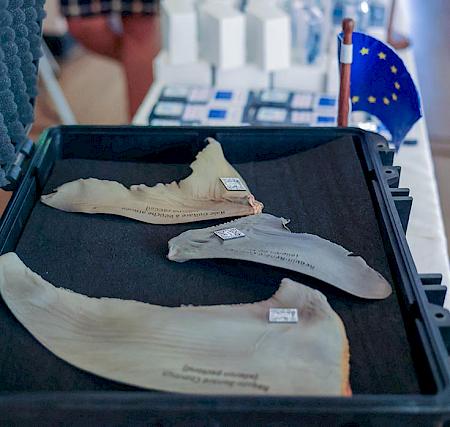
These included the Xylorix Enforcer mobile app for identifying precious timber species, and 3D replicas of fins to support the identification of shark and ray species.
Sometimes, we let shipments through without realising that they contain protected wildlife. With these simple and innovative tools, we’ll be able to identify some of the species quickly. This will make our work much easier.”
Lucienne Ramiandrisoa
Customs inspector at Antananarivo’s international airport
These tools are already in use in multiple countries, where they have helped strengthen enforcement efforts and facilitate wildlife seizures.
Beyond technical tools, the workshops also provided a platform for officers to share insights into the methods used by wildlife traffickers to assist in the interception of future shipments.
Building on these discussions, TRAFFIC and the Directorate General of Customs will develop a practical handbook for frontline officers. This resource will outline key risk indicators associated with illegal wildlife trade, alongside fact sheets on frequently trafficked species in Madagascar covering concealment techniques, common transit routes, destination markets and profiles of high-risk travellers.
By combining risk profiling with enhanced species identification, we aim to equip frontline officers with the skills and knowledge they need to thwart wildlife trafficking attempts.”
Damien Wolff
Project manager at TRAFFIC
Ultimately, TRAFFIC and the Directorate General of Customs of Madagascar hope these efforts will lead to an increase in interceptions of illegal wildlife products at the country’s borders and help law enforcement disrupt trafficking networks more effectively.
Notes:
The above-mentioned activities are implemented by TRAFFIC, funded by the European Union through the GUARD Wildlife Project - Global United Action to Reduce and Dismantle Wildlife Crime. GUARD Wildlife aims to reduce the international trafficking of wildlife and forest products, with a focus on organised criminal networks. Led by UNODC, the project is implemented through a close partnership between members of the International Consortium on Combating Wildlife Crime (ICCWC) and civil society organisations including TRAFFIC.