Explore, Learn, Protect. The trail is located inside the Museum of Zoology (David Attenborough Building, Downing Street, Cambridge, CB2 3EJ).
Millions of wild animals, plants, and natural products are bought and sold around the world every day. When managed legally and responsibly, this trade can support local communities and promote conservation. However, illegal and unsustainable wildlife trade is an international crime worth up to £17.3 billion annually, pushing ecosystems and endangered species to the brink of extinction.
On this page, you can find TRAFFIC visitor trail leaflet, an online map detailing where to locate each specimen inside the galleries, and the expert reference materials and specific scientific sources behind our exhibition labels.
Consult the Museum's opening hours below to plan your visit, the trail officially opens on the in June and lasts through the summer.
Help Protect Wildlife
Your donation helps stop wildlife trafficking and create a brighter future for communities dependent on biodiversity. Together, we can transform wildlife trade into a force for good for both people and the planet.
Click here to make a donation


Opening Times & Visitor Information
Tuesday to Saturday: 10:00 am – 4:30 pm
Sunday: 12:00 noon – 4:30 pm
Bank Holiday Mondays: 12:00 noon – 4:30 pm
Mondays: Closed
Please note: Entrance to the museum is completely free, and access throughout the building is completely step-free. There is no parking available at the museum premises. The onsite shop and café are also open during museum hours (see the website for specific updates).
Innovation Spotlight: The 3D Shark Fin Identification Kit
We have a special display dedicated to our 3D Shark Fin Identification Kit, a collaborative project designed to combat illegal wildlife trafficking on the front lines.
TRAFFIC has developed this kit to help customs officers quickly differentiate between legal and protected shark species at ports. These tactile plastic models are generated from 3D digital scans of 22 different shark species to ensure exact identification matching during field inspections and law enforcement training workshops.
Watch the video below to see how TRAFFIC helps save sharks.
The Wildlife Trade Trail: Featured Species
As you explore the exhibition inside the museum, you can read the educational text featured on our display labels next to each specimen. For visitors looking to dive deeper into the data, the exact research papers, official reports, and scientific references used to build those panels are compiled here for your further information:
 | Abalone | Wright, O. Burgener, M. and Psillos, N. TRAFFIC (2025). ShellShock: the state of South African abalone poaching and trafficking |
 | Eels | TRAFFIC (n.d.). Other Aquatic species - Species we work with at TRAFFIC. TRAFFIC (2019). China’s Champions of Change II: Addressing Demand for Illegal Wildlife Products - TRAFFIC Wildlife Trade Perspectives. |
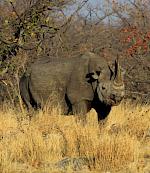 | Rhinos | Roth, T.L., Rebolloso, S.L., Donelan, E.M. et al. Rhinoceros horn mineral and metal concentrations vary by sample location, depth, and colour. Sci Rep 14, 13808 (2024). |
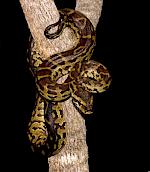 | Snakes | Kasterine, A., Arbeid, R., Caillabet, O. and Natusch, D. (2012). The Trade in South-East Asian Python Skins. International Trade Centre (ITC), Geneva. |
 | Red pandas | World Wildlife Fund. (2023). Red panda. TRAFFIC. (2024). Illegal trade of Red Pandas in India and across borders. |
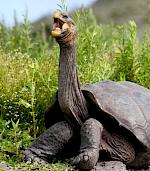 | Galapagos tortoises | Gibbs, James P., et al. Galapagos Giant Tortoises, pp. 49-50. London, Academic Press, 2021. |
 | Tarantulas | TRAFFIC. (2024). Creepy, crawly and critical: Tarantula and scorpion trade in the Philippines unveiled - Wildlife Trade News from TRAFFIC. |
 | Ornamental fishes | TRAFFIC (2025). Kenya’s trade in ornamental marine fish - Wildlife Trade Report from TRAFFIC. |
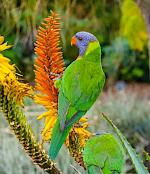 | Parrots | CITES Trade Database [2026]. Compiled by UNEP-WCMC for the CITES Secretariat. Accessed [15/04/2026]. |
 | Songbirds | Shepherd, C.R., Stengel, C.J., and Nijman, V. 2012. The Export and Reexport of CITES-listed Birds from the Solomon Islands. TRAFFIC Southeast Asia, Petaling Jaya, Selangor, Malaysia. Nijman, V., Morcatty, T.Q., Feddema, K., Campera, M. and Nekaris, K.A.I. 2022. Disentangling the Legal and Illegal Wildlife Trade–Insights from Indonesian Wildlife Market Surveys. Animals (Basel) 12(5): 628 |
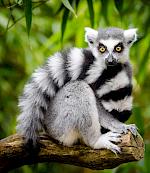 | Lemurs | TRAFFIC (n.d.). Banding together to protect lemurs: understanding and addressing their threats - TRAFFIC - The Wildlife Trade monitoring network. SOS Lemurs - IUCN SOS. |
 | Saiga antelopes | Von Meibom, S., Vaisman, A., Neo Liang, S.H., Ng, J., Xu, H. (2010). Saiga Antelope Trade: Global Trends with a Focus on South-east Asia. TRAFFIC project report to the CITES Secretariat. TRAFFIC Europe. IUCN and TRAFFIC (2025). IUCN/TRAFFIC Analyses of the Proposals to Amend the CITES Appendices. Prepared by IUCN Biodiversity Assessment and Knowledge Team and TRAFFIC for the Twentieth Meeting of the Conference of the Parties to CITES. IUCN – International Union for Conservation of Nature, Gland, Switzerland. |
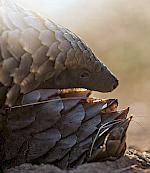 | Pangolins | IFAW. (n.d.). pangolin FAQ: learn about the world’s most trafficked mammal. |
Acknowledgements & Funding Partners

The Wolfson Foundation is an independent grant-making charity with a focus on research and education. Its aim is to contribute to civil society by supporting high-quality projects in science, health, heritage, humanities and the arts. Since it was established in 1955, the Wolfson Foundation has awarded over £1 billion (£2 billion in real terms) to around 14,000 projects throughout the UK, all on the basis of expert review.


TRAFFIC gratefully acknowledge Arcadia, the Postcode Animal Trust and players of Postcode Lottery. Their generosity not only helped make the wildlife trade trail possible, but also supports vital conservation of many of the featured animals.
Many thanks to Ghost Fishing UK for supplying the nets for the 3D shark fin display. Discarded fishing gear like this is being collected from the oceans around the UK by Ghost Fishing, helping to restore ocean health.