
Orangutans in India spotlight wider trade, pressures in apes’ native Southeast Asia
The bewildering discovery of five orangutans abandoned in eastern India has called attention to the relentless demand for the iconic ape and India’s role as a market for the species.
Orangutans in the wild are native only to Indonesia and Malaysia, a world away from the Jaleswar range in Balasore district, Odisha where Indian forest department officials discovered them while on patrol on September 8.
While investigations on the provenance of the Odisha-five are ongoing and international trafficking is suspected, TRAFFIC’s recent rapid analysis shows a long history and persistent illegal trade in orangutans in Southeast Asia.
At least 140 incidents involving orangutan seizures, handovers, rescues and poaching in Indonesia, Malaysia and Thailand were recorded from January 2016 to December 2025. This involved 159 live orangutans, the majority juveniles.
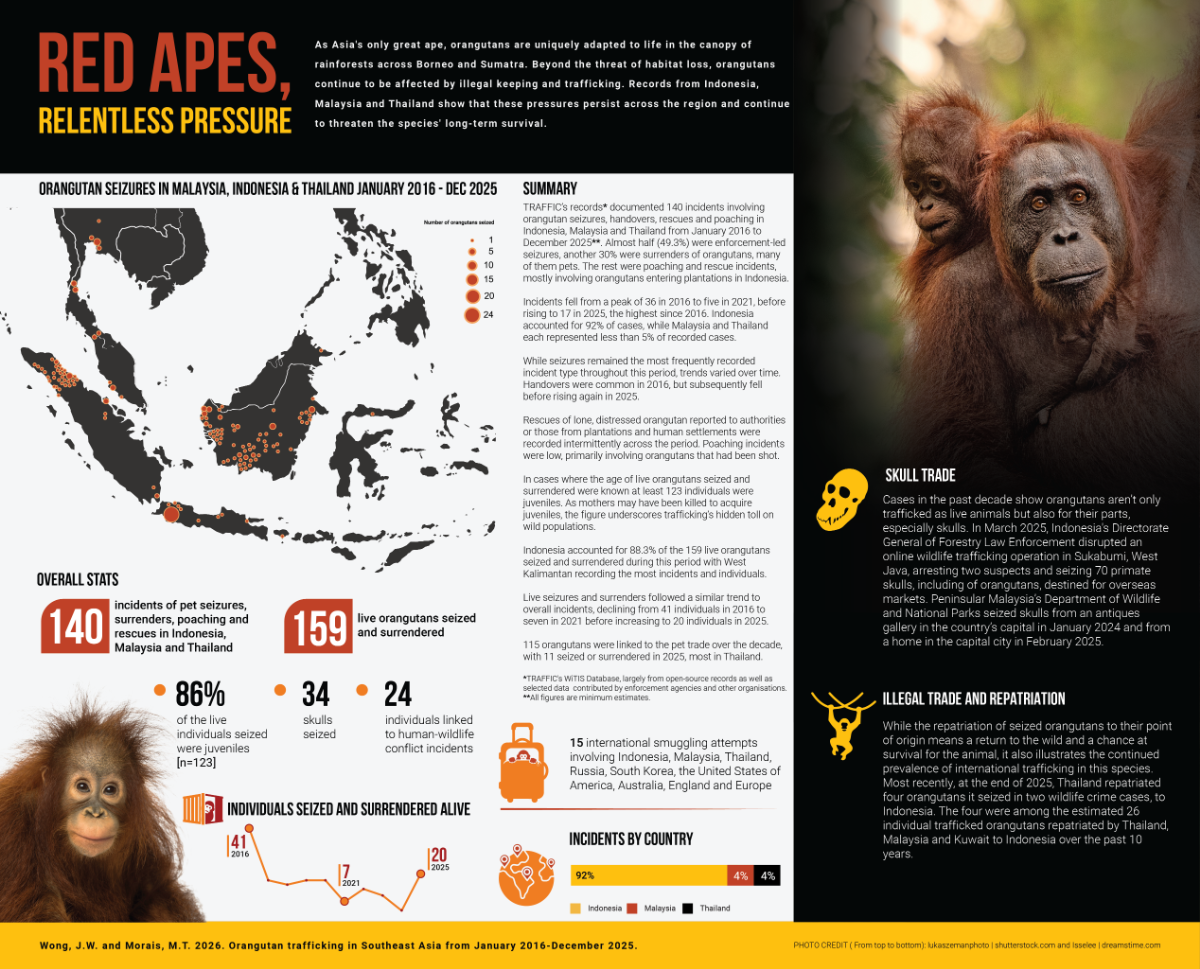
Download the high-res infographic
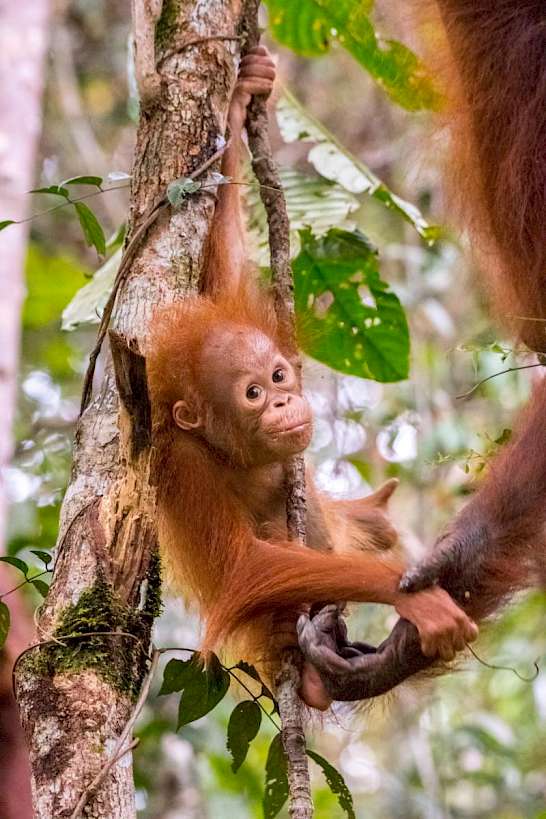
Indonesia accounted for the most incidents and number of orangutans seized. Where species were identified or confirmed, 24% were Sumatran and 37% Bornean. These involved whole animals, dead and alive, and whole skulls.
There were 15 international smuggling attempts linked to these three Southeast Asian countries including Russia, South Korea, the United States of America, Australia and the United Kingdom.
However, orangutans have been seized within India in the past, like in November 2024 when a juvenile orangutan was rescued in a raid on a flat near Mumbai.
Over a dozen other live wild animals, believed to have been smuggled into India were discovered in the same flat in just one of many illegal wildlife seizure cases in recent years. This pattern is recurring and speaks to India’s rising challenge of addressing the smuggling of live wild animals to feed a burgeoning exotic pet market in the country.
The Odisha seizure emphasizes a multi-year pattern involving India, with thousands of animals being trafficked to the country, very commonly from Southeast Asia”
From orangutans to kangaroos, gibbons, red pandas and hornbills, we’ve also seen hundreds and hundreds of wildlife from literally all over the world smuggled into India. The question of where they are all going remains unanswered"
Kanitha Krishnasamy, Director for TRAFFIC in Southeast Asia.
She said thorough investigation, led by Indian authorities, would not only help stop the criminal networks fueling the smuggling but could help uncover information on poaching that could in turn lead to better protection for orangutans in the wild.
Meanwhile, Indonesian authorities have already kicked started efforts to repatriate the recently rescued orangutans from India, issuing a statement just two days after the seizure saying it was “seriously following up” on the case and taking concrete steps to coordinate with Indian authorities on verifying the species and provenance of the apes and enabling their return.
Orangutans face threats beyond illegal hunting and trade. Habitat loss, land conversion and fires are also putting them at risk, with more than 20 reportedly rescued from fires in West Kalimantan, Indonesia as of mid-September.
Notes:
TRAFFIC’s work on combatting the trafficking of great apes and gibbons is generously supported by the Arcus Foundation.