Wildlife trade may involve far more species than previously recognised – new study shows
A major new international study has found gaps in global wildlife trade data that are likely to be obscuring the true scale of trade in wild animals and plants.
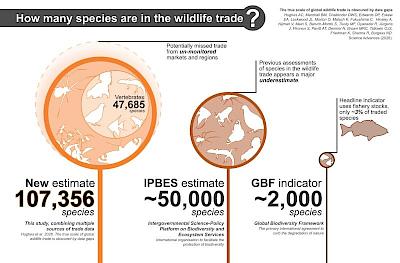
A major new international study has found gaps in global wildlife trade data that are likely to be obscuring the true scale of trade in wild animals and plants. With up to 107,000 species involved in trade, the study’s estimates are double than previously suggested.
Published in Science Advances, the research brings together experts from universities, conservation organisations and international institutions to examine how limitations in available data affect our understanding of wildlife trade.
In obtaining this estimate, the study concludes that significant data gaps, and large variation by taxonomic group and global region, are making it difficult to fully assess which species are being traded and the potential risks they may face. However, study co-authors suggest that leveraging national monitoring in a more systematic way can help us better understand and monitor the scale of wildlife trade.
The research drew on information from multiple sources, including TRAFFIC’s wildlife trade data, to build a more complete picture of the global wildlife trade.
Data is at the core of what we do to understand legal and illegal trade in wildlife species to help inform actions by individuals, businesses and governments”
Addressing the data gaps highlighted by the study will require standardisation of data systems and greater collaborations between stakeholders so that conservation and policy responses can keep pace with the realities of trade.”
- said Sharon Baruch-Mordo, Senior Specialist for Elephant and Rhino Trade at TRAFFIC, and a co-author of the paper.
Every year, wild species worth billions of dollars are traded legally and illegally. These include high value products such as elephant ivory and rhino horn, exotic pets, medicinal and aromatic plants, and on a greater scale also timber and, fish species. Unsustainable and illegal trade is a major threat to the existence of wildlife species and can affect whole ecosystems if the key plants and animals are lost. Illegal trade deprives governments and communities of vital income, and can fuel corruption, violence, and organised crime.
Yet wildlife trade need not be inherently destructive.
Managed sustainably and legally, trade in wild species can support conservation, strengthen local economies, and give communities a tangible stake in protecting nature. This makes wildlife trade one of the most powerful, but often overlooked, leverage points in tackling the global biodiversity crisis.
The research drew on information from multiple sources and partners to build a more complete picture of the global wildlife trade. The findings highlight the importance of continued investment in monitoring, analysis and information-sharing across governments, research institutions, civil society and the private sector. Better evidence is essential for understanding emerging trends, identifying conservation risks and supporting effective decision-making.
For TRAFFIC, the study reinforces the need to strengthen the evidence base that underpins action on wildlife trade. As patterns of trade continue to evolve, improving the availability, quality and interoperability of data will be critical to ensuring that conservation efforts are targeted, effective and able to respond to emerging risks.
The research also aligns closely with TRAFFIC's commitment to generating and sharing information that helps governments, businesses and communities make informed decisions for wildlife and people.
Read more about the study in Nature News: Getting a grasp on the global wildlife trade