New compendium to strengthen vigilance against wildlife trafficking in maritime sector in Singapore
Home to one of the world’s busiest transshipment hubs, Singapore is stepping up to shield its maritime sector from wildlife traffickers, with a targeted guide to help industry members spot and stop those exploiting shipping systems.
DOWNLOAD THE RED FLAG COMPENDIUM
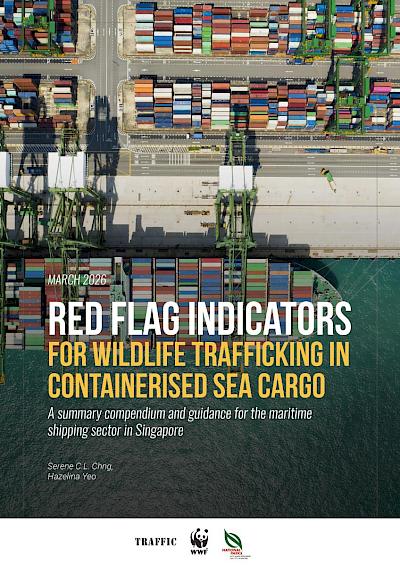
The Red Flag Indicators for Wildlife Trafficking in Containerised Sea Cargo: A Summary Compendium and Guidance for the Maritime Shipping Sector in Singapore’ was launched today, making this shipping powerhouse the first in Asia to have tailored the 2021 global version of the guide to its needs.
Developed by the TRAFFIC Southeast Asia, WWF and the National Parks Board (NParks), with inputs from the World Shipping Council, the Singapore Compendium features country-specific case examples based on globally acknowledged red flag indicators to strengthen detection and action along the maritime supply chain.
The Compendium covers the country’s regulatory framework around transporting wildlife as well as the means and methods by which traffickers attempt to circumvent the system. It also carries recommendations, best practices, tools and reference materials.
Over the past decade, Singapore’s robust border controls and enforcement efforts have led to record-breaking seizures of wildlife contraband transhipped through its port and successful convictions of logistics players for their involvement in these activities.
"Singapore’s frontline experience tackling wildlife trafficking amid high-volume global cargo flows sets the Singapore Compendium apart. We hope the customised guide and this collaboration inspire others in a region highly vulnerable to maritime wildlife trafficking, to recognise the problem and adapt solutions like this guide for their unique circumstances,"
said Serene Chng, Programme Manager of TRAFFIC Southeast Asia.