
High-tech tools strengthen the fight against timber trafficking
In 2026,TRAFFIC trainings in Qinhuangdao and Hangzhou brought together customs officials from China, Asia and Central Africa. The trainings covered timber identification, risk assessment, AI-based data monitoring and cross-border cooperation. Such skills are already paying off on the front line, helping officers detect and intercept illegal timber.
What happens when customs officers are given better tools to spot illegal timber?
A customs officer from the Wuhan Branch of China Customs, who participated in TRAFFIC’s 2023 domestic customs training, later applied skills gained through the programme to help detect a smuggling case involving 140 tonnes of Pterocarpus erinaceus (African rosewood).
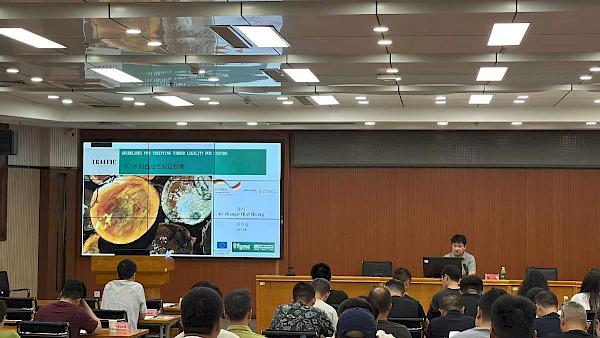 The case offers a tangible example of how specialist training can strengthen frontline enforcement, with knowledge gained in the classroom put into practice in real-world investigations and interceptions.
In 2026, TRAFFIC built on this approach through two major training events in China, bringing together customs and law-enforcement expertise from China, Asia and Central Africa. Supported primarily by the GIZ-TTT Facility, the programme focused on turning technology, trade data and specialist knowledge into practical tools for enforcement.
From data to detection
Illegal timber shipments can be difficult to identify. Officers need to understand not only what a protected timber species looks like, but also where it comes from, how it is traded and what might signal suspicious activity.
At the Customs Academy of China Customs in Qinhuangdao in August, 52 customs officials from 24 customs areas strengthened these skills through training on timber identification, origin verification, trade trends, risk assessment and enforcement. The focus was equipping frontline officers to better identify and investigate potentially illegal timber and timber-derived products, particularly those coming from priority regions such as Central Africa.
The results showed a clear improvement. Average scores increased by 20.77% between pre- and post-training assessments. Participants also took away reference materials and tools that could be shared within their own agencies, extending the reach of the training beyond the room.
Taking cooperation across borders
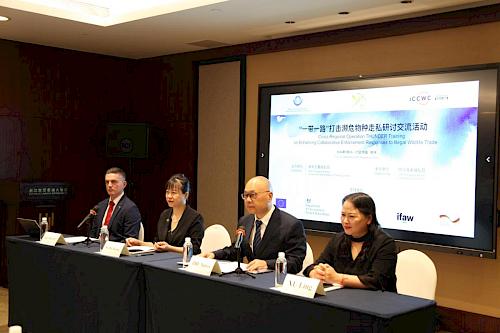 In September, customs representatives from Asia and Central Africa gathered in Hangzhou for a cross-regional Operation THUNDER training co-hosted by the Anti-Smuggling Bureau of China Customs, the World Customs Organization (WCO) and TRAFFIC.
Technology was at the heart of the programme. Participants explored AI-based data monitoring and TRAFFIC tools including Timber Tracker, Wood ID, TimberStats and TWIX, alongside timber identification techniques and enforcement approaches shared by China Customs and the WCO. The training also created an opportunity for customs authorities from timber range, transit and destination countries to discuss illegal wildlife trade trends and strengthen the relationships needed for future cross-border cooperation.
From recognising a protected timber species to identifying suspicious trade patterns and sharing intelligence across borders, these skills can help customs officers move from information to investigation, and ultimately to action, and as the 140-tonne African rosewood case demonstrates, investment in enforcement capacity can translate into tangible results on the ground.
Notes:
The activities were primarily funded by the GIZ-TTT Facility, with complementary support for selected components from the FGMC project and the EU-funded China’s Champions of Change Phase II project.
About GIZ
GIZ on behalf of the German Federal Ministry for Economic Cooperation and Development (BMZ) and the German Federal Ministry for the Environment, Nature Conservation and Nuclear Safety (BMUZ) supports international cooperation for sustainable development and international education work to shaping a future worth living around the world. www.giz.de
About FGMC

The Forest Governance, Markets and Climate (FGMC) programme is the Foreign, Commonwealth and Development Office’s (FCDO) flagship global forest governance initiative. A global programme supporting governance and market reforms aimed at reducing the illegal use of forest resources, benefitting poor forest-dependent people, promoting sustainable growth and climate change mitigation in developing countries.
About the EU

The European Union is an economic and political union of 27 European countries. It is founded on the values of respect for human dignity, freedom, democracy, equality, the rule of law and respect for human rights, including the rights of persons belonging to minorities. The EU is globally well placed to lead the fight against wildlife trafficking. The EU and its Member States diplomatic networks have been mobilised, actively engaging in bilateral and regional dialogues. The EU also championed EMPACT - the EU flagship instrument for multidisciplinary and multiagency operational cooperation to fight organised crime at an EU level. Since 2016, the EU and its Member States have adopted and implemented the EU Action Plan against Wildlife Trafficking and provided substantial funding and resources for capacity building and international action against wildlife trafficking.