New Data Outlines Pathways for Sustainable Himalayan Plant and Fungi Trade
New research presented at the Conservation Asia Congress (CAC) Nepal 2026 is helping shape a more sustainable future for the trade in Himalayan plants and fungi, highlighting both the scale of community dependence and the urgent need for better management
The findings were shared during a symposium on scaling sustainable trade, convened by TRAFFIC, the Asian Network for Sustainable Agriculture and Bioresources (ANSAB), and the University of Copenhagen, with additional invited speakers from Greenhood Nepal, the Federation of Community Forestry Users Nepal (FECOFUN), Tribhuvan University (Nepal) and Kumaun University (India).
The symposium was one of 19 topics selected through a competitive process to receive special focus during the CAC Nepal 2026, reflecting the importance of trade in wild plants and fungi to biodiversity conservation and sustainable development in Asia – as was also remarked by H.E. Ambassador Rob Fenn during his opening remarks at the Congress.
An area of immense promise is Nepal’s rich diversity of medicinal and aromatic plants (MAPs). These resources are deeply connected to traditional knowledge systems and have growing global demand. With the right frameworks - sustainable harvesting, value addition, and fair benefit-sharing—MAPs can: enhance rural livelihoods, support conservation, and contribute to the global wellness economy. This is a clear example of how biodiversity and economic development can go hand in hand."
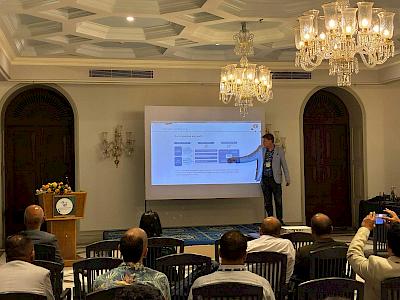
The session builds on growing regional collaboration between scientific and policy actors, including a 2025 international workshop in Chongqing, China, which brought together governments, researchers and organisations to strengthen the scientific basis for sustainable trade in Himalayan medicinal plants and collaborate on effective implementation of CITES trade regulation measures.
These initiatives highlight how research is at the heart of the Scaling Conservation of Himalayan Plants and Fungi through Sustainable Trade (SHIFT) project, a multi-stakeholder effort that is translating scientific data into a comprehensive strategy for sustainable trade and conservation of wild resources.
Building the evidence base
At the heart of the symposium was a clear message: effective conservation must be grounded in strong data.
Researchers presented findings from a survey of 700 households across 10 districts in Nepal, alongside insights from three decades of trade monitoring. Together, these show that wild-harvested Medicinal and Aromatic Plants (MAPs) and fungi contribute far more to rural livelihoods and national economies than official figures suggest – and there is no indication that this dependence is reducing over time.
At the same time, the data point to growing pressure on these resources, with signs of overharvesting and depletion, particularly in western Nepal. Speakers also highlighted key gaps in species conservation status assessments and trade data that need to be addressed to support sustainable management.
Our findings show just how essential wild‑harvested medicinal plants are to mountain households, contributing around 30% of their annual household cash income. This evidence strengthens the case for community‑centred, sustainable management that supports both biodiversity and rural livelihoods,”
said Puspa Lal Ghimire, Deputy Executive Director, ANSAB.
From science to a comprehensive approach
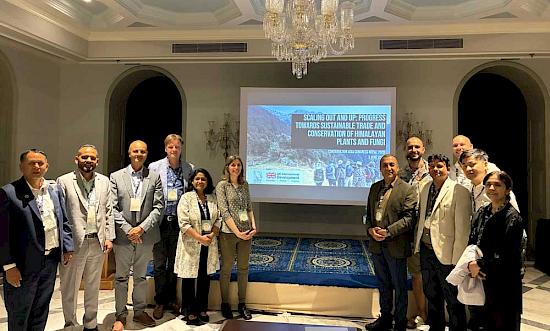
This evidence base directly shapes the SHIFT project’s approach, combining data-driven insights with community-based resource management and behavioural approaches to support more sustainable decision-making. A core part of this model is the integration of Gender Equality and Social Inclusion (GESI). With women and marginalised groups forming a large share of the harvesting workforce, the project places strong emphasis on ensuring they are actively involved in governance and benefit-sharing.
Women and marginalised groups are the backbone of Nepal’s medicinal plant value chains, yet their leadership and labour have too often gone unrecognised. By strengthening gender equality and social inclusion in community forestry, we can ensure fairer access, better prices and more sustainable MAPs management for the people who depend on it most,”
said Sita Aryal, Executive Director of FECOFUN.
Linking local realities to regional markets
The symposium also highlighted the importance of connecting local data to global trade systems. Demand from key markets, such as India and, increasingly, China, continues to shape harvesting pressures in Nepal, meaning that sustainability cannot be addressed at the local level alone. By analysing supply chains and market trends, SHIFT aims to align ecological evidence with regional market accountability, supporting more responsible sourcing and trade practices.
Changing market demand is increasingly shaping how Himalayan wild plants and fungi are harvested, traded and valued. By tracing supply chains and understanding where legality, quality and traceability are strengthened—or lost—we can create real incentives for responsible sourcing. Aligning local ecological evidence with the realities of these major markets is essential if we want trade to support biodiversity and the communities who depend on these species,”
said Bryony Morgan, Project Manager, Scaling Conservation of Himalayan Wild Plants and Fungi through Sustainable Trade.
Bringing these strands together, the session showed how new evidence is already informing action. By grounding interventions in solid research and linking ecology, livelihoods, and markets, the SHIFT project offers a more integrated pathway to safeguarding both Himalayan biodiversity and the communities that depend on it.
The SHIFT project is kindly funded by the UK Government through the Darwin Initiative.
About the Darwin Initiative

The Darwin Initiative is a UK government programme with a focus on biodiversity projects.
About Asia Network for Sustainable Agriculture and Bioresources (ANSAB)
Established in 1992, ANSAB has a vision of rural South Asia built on rich biodiversity and prosperous communities. This vision includes rich, healthy and productive ecosystems actively managed and sustainably used by formerly poor local communities. It also features adaptive people and resilient ecosystems able to cope with global climate change. Generate and implement community-based, enterprise-oriented solutions that conserve biodiversity and improve the livelihoods of the poorest of the poor while bolstering national economic development and addressing climate change is the mission of ANSAB.
ANSAB has implemented conservation and development programmes in more than 30 districts of Nepal and provided policy inputs and services to the government and development partners in seven Asian countries. ANSAB has introduced FSC certification in Nepal, supported enterprises in achieving organic and wildlife-friendly certification, supported NTFPs collector groups and producer enterprises for their management practices complying with FairWild standards, and led successful on-the ground implementation of the UKAID funded Darwin Initiative project 25-018. After the successful implementation of the project 25-018, UKAID funded Darwin Initiative program further provided the project 28-026 for the upscaling of the successes.
About FECOFUN
The Federation of Community Forestry User’s Nepal (FECOFUN) is a non-governmental organization that includes Community Forest User Groups (CFUGs) across the country with offices at the local and provincial level. FECOFUN emphasizes the importance of linking community forest user groups and the role they play in strengthening the rights, roles and responsibilities of users in policy-making processes. FECOFUN works at the grassroots and community level with a focus on sustainable natural resource management (NRM), community rights, gender equity, social inclusion, justice and prosperity. Since its establishment in 1995, FECOFUN has grown into a social movement organization with about 14 million people, all of whom are forest users. FECOFUN’s goal is to promote and protect the rights of community forest users through capacity strengthening, economic empowerment, sustainable natural resource management, technical support, policy advocacy, policy development and networking. All while upholding the values of inclusive democracy, institutional rights, prosperity, gender equity, and social justice.