CITES COP19 begins
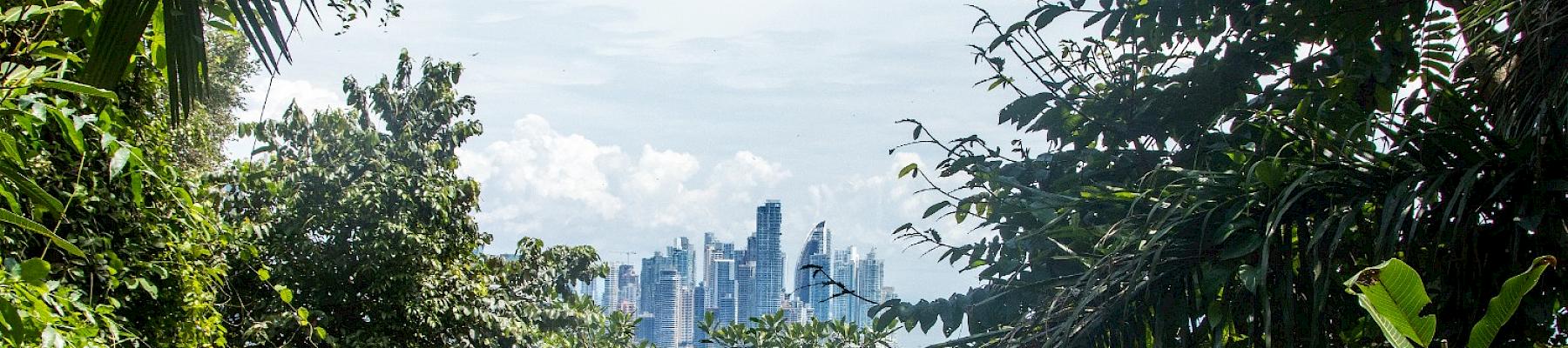
Panama City, Panama, 14 November 2022 - Representatives from governments across the world meet today in Panama for the opening of the 19th Conference of the Parties to the Convention on International Trade in Endangered Species of Wild Fauna and Flora (CITES CoP19).
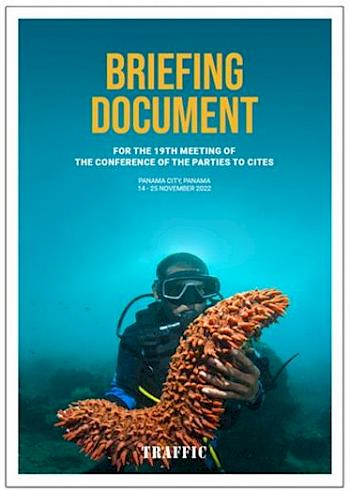
Providing data-led evidence and reports, TRAFFIC has analysed all 52 proposed amendments to CITES Appendicies and developed a Briefing Document for Parties on agenda items and proposals.
As the world looks to safeguard the future of the planet for humans, animals, plants and their ecosystems, global leaders have a critical role to play to ensure that trade in wild species is legal and sustainable. To support CITES CoP19, TRAFFIC has provided unbiased, scientific data and strives to guide parties to collaborative nature-positive outcomes to secure the survival of species and the people that rely on them."
Richard Scobey, TRAFFIC Executive DirectorThe agenda covers a wide variety of strategic and implementation topics, including traceability, stockpile management, building mechanisms for sustainability (via non-detriment findings), and pioneering guidance on demand reduction through behaviour change initiatives led by TRAFFIC experts. Also, for the first time, there will be a draft Decision encouraging Parties to implement anti-corruption strategies and integrate financial crime into wildlife crime investigations.
Discussions will also delve into the intricacies of species-specific issues, such as a first-of-its-kind report for CITES looking at the intertwined trade of big cats, Madagascar's precious timbers, the state of legal and illegal trade of iconic species such as rhino, and spotlighting endemic species of the host country and surrounding Latin America and the Caribbean. Proposals will also be discussed to strengthen international regulation on a variety of commercial marine and timber species.
Just days after the CITES conference, the Post-2020 Global Biodiversity Framework prominently features ahead of Part Two of the Convention on Biological Diversity (CBD) CoP15, which is due to be adopted in December in Montreal, Canada. TRAFFIC believes there should be strong coordination, coherence and alignment between CITES and the Post-2020 Global Biodiversity Framework to ensure that CITES can contribute effectively to the implementation of the framework’s targets on wildlife trade and sustainable use.
TRAFFIC will also be supporting measures to address wildlife cybercrime and promote legal and sustainable sourcing via certification systems.
The coming weeks will be full of complex discussions on the nuances and holistic efforts to ensure international trade in wild plants and animals is not a threat to the conservation of nature. To learn more about TRAFFIC's positions on essential agenda items and related reports, visit our dedicated CITES COP19 webpage.
Convention on International Trade in Endangered Species of Wild Fauna and Flora (CITES)

The Convention on International Trade in Endangered Species of Wild Fauna and Flora (CITES) was signed on 3 March 1973 and entered into force on 1 July 1975. With 185 Parties (184 countries + the European Union), it remains one of the world's most powerful tools for wildlife conservation through the regulation of international trade in over 41,000 species of wild animals and plants. CITES-listed species are used by people around the world in their daily lives for food, health care, furniture, housing, tourist souvenirs, cosmetics or fashion. CITES seeks to ensure that international trade in such species is sustainable, legal and traceable and contributes to both the livelihoods of the communities that live closest to them and to national economies for a healthy planet and the prosperity of the people in support of the UN Sustainable Development Goals. Find out more here.